Pages

Showing posts with label Dog Walk. Show all posts

Wednesday, March 4, 2015

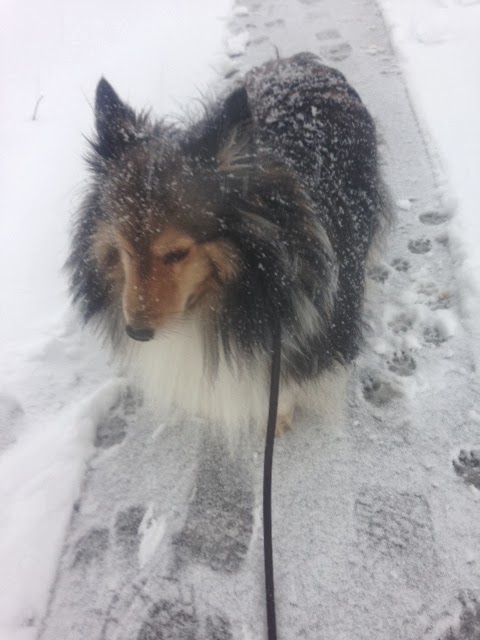
Paw Prints In The Snow...The Joy Of A Winter Dog Walk

It has been a cold, snowy winter and all of the dogs I walk, love it. When the dogs are excited to walk, even cold weather walks are enjoyable for me although I would much prefer walking on a sandy beach. For the pups, every walk in the snow is an adventure.


I enjoy winter walks the nost when the snow is still falling and everything is white and beautiful. Falling snow confuses some of my furry friends and they will lift their heads to the sky to see where this white stuff is coming from. Others don't even seem to notice and just enjoy their walk as they would any other day.

Once the snow is on the ground, it's a puppy winter wonderland! Some want to lay down and roll around. Others love to dig, or poke their nose deep in the piles as if looking for hidden treasure. None of them mind the cold or the wetness, they just see it as fun.

Their joy makes me smile and will brighten a winter day every time. Best of all, they leave behind one of my favorite things of winter - paw prints in the snow! All different sizes, in different patterns, leaving behind wonderfully cute reminders of the fun that was had.

Then, when the sun comes out, and the snow begins to melt, the  new source of excitement are the uncovered patches of grass that appear. For the dogs it's an opportunity to sniff the upcoming spring. For me it's a symbol of the warmer weather that will soon be here.

Does your dog like to make paw prints in the snow?

Wednesday, February 25, 2015

Potential Hazards When Walking Your Dog - My Dog Thinks That's A Treat?

For your dog, a daily walk is an adventure. Often the adventure will lead your dog to things to explore, pick up, drink or eat. Some of these things could be unexpectedly harmful. It's amazing to see what a dog will consider worthy of snacking on. Some things are obvious. Once while on a dog walk we came across a sandwich that someone had abandoned on the road. As soon as my furry friend saw that (smelled it?) his face lit up that it was the most wonderful thing he ever encountered. It took all my strength, and promises of treats when we got home, to keep him from gobbling it up. Letting him eat it would not have been wise since there could contain food items or ingredients that could make him sick.


It's best to be alert during walks to prevent you dog from ingesting hazardous items. Some things to look out for:

Rocks

Rocks? Yes, rocks. Some dogs like to eat them. Maybe it's their texture, crunchiness, or perhaps they smell or taste good, but if they are swallowed they can cause a variety of internal upsets. Smaller stones and pebbles might pass right through but you will need to spend the next day or two searching through their poop to make sure it has passed. Larger stones and rocks could cause internal injury and blockage that would require emergency surgery. Dangerous and painful to your dog and damaging to your wallet. It's best to make sure your dog avoids them.

Poop

Some dogs actually view poop as a treat. Whether it be their own or some that has been left on the side of the road, you should be aware that your dog may find it appetising.While eating their own poop is not dangerous to your dog, only distasteful to humans, eating poop from unknown origin could be since it may contain parasites and/or bacteria that could make them sick.

Cigarette Butts

Some dogs find cigarette butts enticing and enjoy chewing on them. Cigarette butts contain nicotine which is highly toxic to dogs. If you notice your dog has found one and is chewing, get it away from them as quickly as possible. When retrieving it is not successful, and it has already been swallowed, make sure they don't have access to any others. Signs of nicotine poisoning includes vomiting and diarrhea, so be on the lookout for these sympthoms or other abnormal behavior. Contact your veterinarian immediately if your dog is showing any adverse reactions.

Puddles of Water

Puddles of water may look inviting to a thirsty dog. Well it's only water, right? It's water but the problem is you don't know what could be in that water. Puddles from melting snow could contain sodium chloride, the ingredient in many types of ice melt. Sodium chloride is highly toxic to dogs. Puddles in the street could also contain traces of gasoline or oil as well as many other nasty ingredients. Best to steer your dog away from the puddles and be sure to bring along water for long walks, especially on hot days.

Staying alert and watching your dog on walks is the best way to keep them safe. Has your dog ever ate, or tried to eat, anything unusual on a walk?

Tuesday, February 17, 2015

Keep Yourself Safe While Walking Your Dog - Winter Weather Tips

Some dogs are naturally equipped to endure cold winter weather. Many actually thrive in it. My Sheltie, with her thick, double coat, never seems to be cold. Huskies are another breed who loves, and needs, cold temperatures. To make walking these dogs safe and tolerable, we need to protect ourselves from these harsh winter conditions.

Snow...I love the winter!

One of the biggest and most dangerous issues is icy roads and sidewalks. Black ice can easily catch you by surprise and send you tumbling, especially if your furry friend gives an unexpected tug on the leash. When walking, be on the outlook for surfaces that look wet and a little shiny. If the temperature is below 30 degrees wet will most likely mean frozen. Sometimes the road less traveled is the best way to go. Walking on snow covered surfaces can be safer than slick, clean areas.

Be sure to wear cold weather boots with deep treads on the soles to help you grip the road. Keep your
A little snow won't stop my walk!
pup on a short leash holding with 2 hands so you both walk next to each other. Walking in this position will give you more control and stability if you get an unexpected tug.

Wearing proper clothing to keep yourself warm and dry during the walk is a given. However, keeping hands and fingers properly insulated is always a challenge for me. Although I always wear gloves, the cold and wind makes my skin dry and painful. Protect your hands by first covering your skin with a layer of thick lotion - the petroleum jelly type works best - before putting on gloves.

Look at my shadow...I'm really bundled!
In extreme cold, frostbite is always a concern. Be sure to have a warm scarf to cover your mouth and nose and a hat that keeps your ears covered. It's surprising how fast frostbite cans set in in sub zero weather. When the temperatures fall into negative numbers it's best to keep the walks short for the safety of both you and your pup. If daily exercise is a must, take frequent short walks rather than one or two long ones.

For information on keeping your pets safe in harsh winter weather please visit Cold Weather Care For Your Dog and What To Do If Your Dog Gets Frostbite.

Does your dog like to go out even on the coldest winter days? Please share your tips on how you stay warm on your end of the leash!

Saturday, January 10, 2015

Shadow Dogs - The Joy Of A Late Afternoon Walk

Late afternoon is one of my favorite times of day to walk dogs. The sun begins to move down across the sky and creats a world of shadows that transforms the street into a gallary of art. Small dogs look big; big dogs look huge. Angles create distorted images that remind me of carnival mirrors with every movement transforming the shadow into a everchanging moving image.


Monday, September 29, 2014

It's Time To Allow Dogs To Be True Members Of Society

What are some of your dog's favorite place to visit? Dogs are very social and benefit from interactions with both humans and other dogs. But sadly, misconceptions about dogs and the countless myths about their behavior has lead to an over abundance of these:


For dogs to be upstanding canine citizens they first need to be social and accepted as members of the community. This includes park trails for dogs to walk on-leash. On-leash walking trails give dogs to opportunity to meet and greet other dogs and humans while maintaining their own controlled space.  In addition, with the help of the leash, they have the opportunity to learn boundaries, get exercise to release energy, and experience the world around them in a controlled environment.

Dog parks allow dogs to run off leash is a safe area as they learn to interact with other dogs of a variety of personalities and temperaments. They allow dogs to find companionship and learn life lessons that they can only learn from other dogs.

Experience eliminates fear - Dogs who are involved and accepted in the community are better behaved.  Through social events they learn and understand what is expected of them in society.

It's not only the dogs need to learn. Humans need to learn how to properly interact with their canine companions. Quite often, this requires the willingness and ability to think like a dog. It's important to respect a dog's space, treat them with respect, and understand that a dog can't respond with words. When bullied or intentionally, or unintentionally, provoked they may react with a growl or a nip. It's important to know that these reactions do not make the dog viscous, they are simply be communicating pain or fear.

It's time to let "man's best friend" be given every opportunity to to be part of the community and bring the joy and companionship that will enhance the lives of all they meet.


Wednesday, March 5, 2014

Don't Ask The Groundhog...Your Dog Knows When Spring Is On The Way

I know spring is coming without ever looking at the calendar, feeling the change in weather, or seeing spring bulbs starting to pop out of the ground. Although they are all signs of spring, the most accurate information comes from the dogs I walk.

Nothing excites a dog's nose like the change in seasons. Winter walks are challenging with snow covering up grassy areas and piling up around trees limiting the accessible sniffing areas. With everything frozen, even the uncovered area must loose their excitement. Although many dogs love the cold weather, live to climb to the top of snow piles, and hop and dig through piles of white, as the months drag on they seem to get bored with the frozen landscape.

I always wait for the day to come. We go out on our walk as usual, but as soon as we exit the door I can tell things are different. Their nose starts to twitch. Ears perk up. It's not long before I know a new season is upon us! Walks are no longer "walks" they are short stops from one sniff spot to another. Some spots smell so good it is difficult to drag them away! Do they smell the flowers ready to emerge from their winter hiding spots? Does the grass smell different as it awakens from its winter sleep? It makes me wish I could enjoy the scents of spring this early in the season but I will have to wait. When the flowers start to bloom and the trees start to bud I will finally be aware of the change of season by the slight changes in the scent of the wind. Until then I will enjoy the excitement I see from the dogs and anticipate the beautiful weather that will soon be here.


Saturday, February 8, 2014

Cold Weather Care For Your Dog

The winter and extreme cold temperatures bring some unique challenges to our pets. Just because our furry friends are...furry, doesn't mean we don't need to protect them from frigid weather conditions. When the temperature drops we need to be aware of signs that they may be suffering the effects of the change in temperature.


Chapped skin: Even with fur, there are parts of your dog's body that can get chapped from the wind and cold. A common area is the top of their nose. A wet nose out in the cold wind will become dry and flaky over time.  Protect your dog's nose with a layer of petroleum jelly when venturing out in cold or daily as a preventative measure.

Cracked Paw Pads: Walking on frozen streets and chemical ice melt can irritate your pup's paw pads and cause soreness and cracking. A thin layer of petroleum jelly before going out in the cold will protect the bottom of your dog's feet. If you notice cracking and bleeding on the pads The American Red Cross recommends washing the affected paw with a saline wash (1 teaspoon of salt to 1 quart of warm water). If severely cracked and bleeding, bandage and consult your veterinarian.

Hypothermia: Limit your dog's outdoor time during extreme cold temperatures.  Extended exposure to frigid conditions could lead to hypothermia. Hypothermia occurs when your dog's body temperature drops to dangerously low levels. Symptoms include: disorientation, uncontrolled shivering, and dilated pupils. If you suspect your dog is suffering from hypothermia take your dog to a warm place, wrap in a warm blanket, and call your veterinarian immediately.

Frostbite: Frostbite is the freezing of body tissue. Especially vulnerable areas on your dog are ears, tail, and paw pads. When temperatures drop below 0 degrees, frostbite can occur in less than 10 minutes. After a period of time outdoors in below freezing temperatures be sure to check your dog's skin for signs of frostbite. Skin that appears blue or pale skin could be affected. If you suspect frostbite, get your dog to a inside area, wrap the affected area in a warm (not hot) compress and call your veterinarian.

Prevention is the best to avoid injury from the cold. When the temperature outside drops to dangerously low levels, limit the time your dog stays outside. Make more frequent short walks to outdoor play times to limit extreme cold exposure. Puppies, short haired, and elderly dogs would benefit from a sweater or jacket. Dog clothing is not only for fashion but can be functional as well.

Monday, February 3, 2014

Snow Day with Furry Friends!

My furry friends and I walk in all types of weather and this winter has been exceptionally challenging. Much more snow this year then we are accustomed to here. Some of my doggie friends love the snow and some, like me, cannot wait for spring.

Despite the weather, the pups must go out so some choose to get dressed and ready for the cold:

Bailey LOVES the snow!


Others look at me as if to say "did we really have to come out here?":


My dog Dallas dislikes the snow so much I need to shovel out spots on the grass so she will "do what she needs to do". While everyone else is shoveling their walks, I'm shoveling grass. The things we do for our furry friends!

What does your dog do when they see the snow?


Saturday, January 25, 2014

What To Do If Your Dog Gets Frostbite

Winter this year in my area has been particularly harsh. We have had many days of single digit temperatures and sub zero wind chills. Conditions like these put your dog at risk for frostbite.


Some snowy days are nice but others can be dangerous
when the temperature drops


Frostbite is the freezing of the tissue of parts of the body. Most susceptible are the extremities, for a dog that would be the ears, tail, and paw pads. When the windchill drops below 0 degrees, frostbite could occur in less than 10 minutes of exposure.

Dogs need to go out to "do what they got to do" even on the coldest days, so when you bundle up make sure your furry friend is protected as well.

How do I help prevent frostbite:

  • Elderly dogs, those with very short or thin fur, and puppies should wear a sweater or jacket.
  • Take short "potty breaks" outdoors in the early morning and nighttime when there is no sun.
  • Schedule longer walks for midday when the temperature is the warmest.
  • Wipe feet if ice and snow accumulate, especially between paw pads.
  • Upon return to indoors, thoroughly dry your pup

How do you know if your dog has frostbite?

The most noticeable sign is discoloration of the skin. If your dog has been outdoors in extreme cold for an extended period of time check the tips of their ears, tail, and feel for pale or blue skin. In advanced stages of frostbite the skin will be black. Since frostbite caused numbness and pain your pup may limp, lick their paws, or rub their ears. 

What to do?

If you suspect frostbite:
  • Take your dog inside where it is warm.
  • Lightly spray the affected area with warm water.
  • Apply warm (not hot) compresses to the area.
  • Take your pup to their veterinarian to check for tissue damage. 

I highly recommend everyone have a first aid manual and kit on hand. The American Red Cross is an excellent resource for information on how to care for an injured pet. 

Wednesday, January 22, 2014

Wordless Wednesday - Blizzard!!


By the look on her face you can tell Dallas does not like the snow! 

What is your pup's favorite season?


BP_Wordless_wed_Hop_Logo_2014


Sunday, December 22, 2013

7 Reasons To Walk Your Dog

There are lots of reasons to leash up your pup and "hit the road", "pound the pavement" or "take a stroll in the park". Running free in a fenced yard or playtime at a dog park are great but neither has as many health benefits as an old fashioned walk. I have compiled a list of my top seven reasons why you should walk your dog. Some of these reasons may surprise you.  Although the list is in no particular order, the first reason I am listing is my favorite.


1) A daily walk is a wonderful opportunity for bonding time with your pooch: There is nothing like experience long walks together in beautiful weather.  Although there will be days of rain, snow, or other inclement weather you need to take the bad with the good - together.

2) Walking is not only great exercise: Starting the day with an invigorating walk is a wonderful stress reliever.

3) Outdoor walking is great for your dog's feet: Walking on hard pavement will help file your dog's nails.

4) Dog's that get out and walk are better socialized: Running around in a fenced yard is very isolating. If your dog doesn't see people, other dogs and animals they will not learn proper behavior.

5) It helps them learn their neighborhood: As you walk with your dog they will learn the sounds and
smells of their neighborhood/ They will also mark their territory, leaving their scent along the way. This serves as a guide for them to find their way home in the event they wander away alone.

6) Walking is good for all ages: Puppies and young dogs need an outlet for their energy; adult dogs will benefit greatly from the daily exercise. Walking helps older dogs stay active in their senior years.

7) It helps prevent dogs from becoming fearful: Locked behind a high fence, dogs hear noises they don't understand and they have no way to investigate them. When out for a walk these noises surround them, they can see what they hear.  They take clues from you, their walker, that tells them if these noises are cause for alarm.

Nothing makes my dog, Dallas, happier than her daily walk. Even if it is just a short walk around the block I can tell she enjoys every minute...and so do I.

Friday, July 12, 2013

What If Your Dog Doesn't Like to Go For Walks?


Long walks with your dog can be fun, relaxing and great exercise for both you and your pup.  You get the leash, the clean up bags, a bottle of water and are ready to go. But what if your pup is not enthusiastic about walking? What do you do?

Suddenly refusing or avoiding physical activity may be a sign of injury or illness, so if this is new behavior a visit to the vet may be in order.  However, if you have recently adopted a new furry friend and want to encourage long walks or if your usually inactive pup needs some exercise here are some tips to get them up and moving.

Make sure the collar is not to tight or the leash too heavy.  You should be able to easily fit two fingers under your dog's collar - not too tight that it will choke but not so loose they can pull out.  It's also important to have the proper width lead with the appropriately sized hook. Using a wide,  heavy leash with a large heavy clasp is too much weight for a little dog to walk around with.

Schedule your walks at the same time each day.  Your dog will anticipate their daily walk if they know when to expect it each day.

Avoid extreme heat.  On hot days, walk in the early mornings or evenings when the sun is not as strong. Always bring along water for you and your pup to stay hydrated.

Bring along the treats. It always helps to have a little encouragement along the way.

Mix it up.  Travel different routes for your daily walks.  Your pup will be excited about the different sights, sounds and smells. They will enjoy going new places and having new experiences.

Most importantly, have fun. If you are excited about the walk your dog will be too.

Saturday, May 25, 2013

Safe Walks For You and Your Dog - The Importance of a Short Leash

Walking dogs on a leash can be as dangerous as letting them run free.  It can also be dangerous for the walker at the other end of the leash. Using the proper type and length of leash is the first step to ensuring a fun and safe walk for all.

Traditional leashes keep your pup safely by your side and out of harms way. Retractable leashes that allow your dog to wander while you walk are extremely dangerous. Especially when walking on sidewalks or in the street.


  • If the dog were to unexpectedly run to chase a squirrel, bird, or other distraction the leash will not prevent them from running into the path of a car.  
  • The extra long length of the retractable leash gives the pup freedom to wander back and forth in front of the walker, causing a potential tripping hazard.
  • If the dog is walking far ahead of the walker, and wiggles out of their collar or harness, they would be too far away to potentially catch them if they decide to run.
  • Without the walker's knowledge, the pup may find and eat toxic or dangerous things off the street or the grass that they find along the way. 
Retractable leashes could be beneficial when used for freedom in a controlled environment, like a  park or beach, where there is room for your pup to safely run at a distance. If used during a walk, it is best to lock the leash at a length that will keep your dog close by your side.

   
For safe walking on any type of leash:
  • Teach no pull walking by stopping and giving a firm "no" whenever the dog pulls.
  • Prevent dog from weaving back and forth in front of the walker by keeping the pup firmly on either the right or left side.
  • Be aware of, and steer away from, hazards on the road like broken glass to prevent injury to dog's paws.
  • Use the proper weight (width) leash for the size of the dog - small, medium, or large - and extra light leashes for small puppies.