Thoughts, observations, advice, and experiences while living life with our pets.
Showing posts with label Dog. Show all posts
Saturday, January 10, 2015
Shadow Dogs - The Joy Of A Late Afternoon Walk
Late afternoon is one of my favorite times of day to walk dogs. The sun begins to move down across the sky and creats a world of shadows that transforms the street into a gallary of art. Small dogs look big; big dogs look huge. Angles create distorted images that remind me of carnival mirrors with every movement transforming the shadow into a everchanging moving image.
Monday, September 29, 2014
It's Time To Allow Dogs To Be True Members Of Society
What are some of your dog's favorite place to visit? Dogs are very social and benefit from interactions with both humans and other dogs. But sadly, misconceptions about dogs and the countless myths about their behavior has lead to an over abundance of these:
For dogs to be upstanding canine citizens they first need to be social and accepted as members of the community. This includes park trails for dogs to walk on-leash. On-leash walking trails give dogs to opportunity to meet and greet other dogs and humans while maintaining their own controlled space. In addition, with the help of the leash, they have the opportunity to learn boundaries, get exercise to release energy, and experience the world around them in a controlled environment.
Dog parks allow dogs to run off leash is a safe area as they learn to interact with other dogs of a variety of personalities and temperaments. They allow dogs to find companionship and learn life lessons that they can only learn from other dogs.
Experience eliminates fear - Dogs who are involved and accepted in the community are better behaved. Through social events they learn and understand what is expected of them in society.
It's not only the dogs need to learn. Humans need to learn how to properly interact with their canine companions. Quite often, this requires the willingness and ability to think like a dog. It's important to respect a dog's space, treat them with respect, and understand that a dog can't respond with words. When bullied or intentionally, or unintentionally, provoked they may react with a growl or a nip. It's important to know that these reactions do not make the dog viscous, they are simply be communicating pain or fear.
It's time to let "man's best friend" be given every opportunity to to be part of the community and bring the joy and companionship that will enhance the lives of all they meet.
For dogs to be upstanding canine citizens they first need to be social and accepted as members of the community. This includes park trails for dogs to walk on-leash. On-leash walking trails give dogs to opportunity to meet and greet other dogs and humans while maintaining their own controlled space. In addition, with the help of the leash, they have the opportunity to learn boundaries, get exercise to release energy, and experience the world around them in a controlled environment.
Dog parks allow dogs to run off leash is a safe area as they learn to interact with other dogs of a variety of personalities and temperaments. They allow dogs to find companionship and learn life lessons that they can only learn from other dogs.
Experience eliminates fear - Dogs who are involved and accepted in the community are better behaved. Through social events they learn and understand what is expected of them in society.
It's not only the dogs need to learn. Humans need to learn how to properly interact with their canine companions. Quite often, this requires the willingness and ability to think like a dog. It's important to respect a dog's space, treat them with respect, and understand that a dog can't respond with words. When bullied or intentionally, or unintentionally, provoked they may react with a growl or a nip. It's important to know that these reactions do not make the dog viscous, they are simply be communicating pain or fear.
It's time to let "man's best friend" be given every opportunity to to be part of the community and bring the joy and companionship that will enhance the lives of all they meet.
Sunday, July 13, 2014
Pet Safety For Puppies - Everything Changes As They Grow
Puppy parenting can definitely be a challenge when it comes to safety. The precious little bundle of fur is also a bundle of energy and curiosity. They love to explore, run, jump, and, of course, chew. All the while they are growing which means that, in order to keep them safe, thing need to change right along with them.
July is Pet Safety Month and it is also a month when many families welcome new pups into their home. Puppies will chew and try to eat everything so it's important to know what to keep out of reach and when to worry if something is accidentally ingested. With growth comes change and many things need to change right along with them. Remember, what is "out of reach" today may be fully accessible to them tomorrow.
Not all foods are dog friendly: Many everyday human foods are toxic to dogs, including, but not limited to,
July is Pet Safety Month and it is also a month when many families welcome new pups into their home. Puppies will chew and try to eat everything so it's important to know what to keep out of reach and when to worry if something is accidentally ingested. With growth comes change and many things need to change right along with them. Remember, what is "out of reach" today may be fully accessible to them tomorrow.
Not all foods are dog friendly: Many everyday human foods are toxic to dogs, including, but not limited to,
- Chocolate
- Onions
- Garlic
- Grapes
- Raisins
- Avocado
- Gum (that contains Xylitol)
Not only should these foods never be given to your dog, they must be kept far from their reach. Open bowls on tables, bags of food in a backpack, grocery bags left on a chair, are all places your pup may find, and eat, what they shouldn't.
Medications: Be sure to keep all prescription and over the counter medications out of puppies reach (both human and veterinary) . Bottles of pills rattle and may sound like fun to your pup. Remember, they will be able to chew right through the bottle, box, or packaging. These bottles or boxes can be easily grabbed off a table top or can be pulled out of a bag or backpack.
Frequently Check Toys: Puppies love toys that squeak. Unfortunately, if that toy becomes ripped and tattered the squeaking mechanism can become a choking hazard. Check toys often for rips and tears and discard those that could become a danger.
Beware of plants both inside and out: Click Here for a listing of both toxic and non-toxic plants.
Collars, Leashes, and Harnesses: As your puppy grows their collars, leashes, and harnesses need to grow with them. Collars should be checked every week to ensure a comfortable fit. Too tight collars will irritate your dogs skin or will cause lacerations if they become much too small.
Frequently check the leash for rips and tears. Puppies love to chew on them and damaged areas may break unexpectedly on a walk and cause a dangerous situation.
Labels:
Dog,
Dog Behavior,
Dog Care,
Dog Safety,
Pet Safety,
Pets,
Puppy
Friday, July 4, 2014
Bugs and Weeds? Protect Your Pets (and The Bees) by Going Natural
On a recent trip to a local nursery to purchase garden plants I saw a wonderful sight more beautiful than the many colors of the annuals or the varied hues of the flowering trees.
Though I'm not sure the bumble bee fits into the category of furry and feathered friends, they are a wonderful part of the world and the environment. Sadly, colonies have been dying and the bee population is becoming drastically reduced. Environmental changes may be partly to blame but human intervention and their lack of regard for the earth is playing a major role.
As both an animal lover and gardener I find this to be of great concern. I recently learned that some garden center treat their plants with a pesticide that repels bees. Sadly this shows just how far some will go to achieve a pristine, bug free environment for ascetic reasons with a total disregard for the balance of nature.
If we would only look towards the many natural, environmentally friendly alternatives to chemical pest control it would benefit the environment, quality of life, and the health of our pets. In recent months I have seen in increase in the number of home gardeners toting around large containers of chemical weed killers as they spray every inch of their lawn and garden. Do they not realize that the spray is not only killing the weeds but it is poisoning the environment and making it toxic for pets and other animals?
Before reaching for the chemicals, know that the following are only some of the tools and ingredients for natural pest control:
Ants:
Though I'm not sure the bumble bee fits into the category of furry and feathered friends, they are a wonderful part of the world and the environment. Sadly, colonies have been dying and the bee population is becoming drastically reduced. Environmental changes may be partly to blame but human intervention and their lack of regard for the earth is playing a major role.
As both an animal lover and gardener I find this to be of great concern. I recently learned that some garden center treat their plants with a pesticide that repels bees. Sadly this shows just how far some will go to achieve a pristine, bug free environment for ascetic reasons with a total disregard for the balance of nature.
If we would only look towards the many natural, environmentally friendly alternatives to chemical pest control it would benefit the environment, quality of life, and the health of our pets. In recent months I have seen in increase in the number of home gardeners toting around large containers of chemical weed killers as they spray every inch of their lawn and garden. Do they not realize that the spray is not only killing the weeds but it is poisoning the environment and making it toxic for pets and other animals?
Before reaching for the chemicals, know that the following are only some of the tools and ingredients for natural pest control:
- vinegar
- salt
- cinnamon
- dry grits
- borax
- Epsom salt
Ants:
- Sprinkle dry, uncooked grits or cinnamon in areas where ants are active. Apply along the edge of windowsills, edges of door frames, or along the the walls of the counter top to keep them away.
- Ants by your pet's food a problem? Clean the floor around the bowls with a 2:1 solution of water and white vinegar
Got Weeds?
Don't reach for the Roundup. Natural weed killers are easy to mix and use. Click Here for a natural weed killer recipe using vinegar, dish detergent, and Epsom salt.
Think natural and "go green" for safe pets, beautiful gardens, and a healthy environment.
Sunday, March 23, 2014
Does Your Dog Communicate With "The Shake"?
We have all seen our dogs do "the shake", especially after a bath or after getting wet in a downpour. Dogs also have their own personal reasons to shake, some we may understand and some we may not. Recently, I have been trying to decipher "the shake" to determine what my doggie friends are trying to communicate.
For one I have noticed that his shake is his way of letting me know he is annoyed with me. When I interrupt his chew time to leash him up for a walk, he shakes. I pull him away from a dangerous sniff spot, he shakes. Sometimes after the full shake he will shake just his head with a slight muffled bark...I guess that means he is really annoyed at me. I wonder if he has noticed that I have figured out his secret code.
Another one of my walking buddies will shake right before I open the door for us to go outside. After I leash him up we walk to the door and, on queue every time, he will shake. An happy, excited, full body body shake that starts at his ears and works it's way all the way down to the end of his tail. It makes me smile because I know that is his signal that he is happy we are taking a walk together.
When I am out walking with my dog Dallas she will shake, every time, after she has "done what she needed to do". A quick, full body shake that is so fast I believe her feet actually lift off the floor. That's her signal to me that she is done with the business of the walk and ready to go have fun.
Does your dog communicate with "the shake"?
For one I have noticed that his shake is his way of letting me know he is annoyed with me. When I interrupt his chew time to leash him up for a walk, he shakes. I pull him away from a dangerous sniff spot, he shakes. Sometimes after the full shake he will shake just his head with a slight muffled bark...I guess that means he is really annoyed at me. I wonder if he has noticed that I have figured out his secret code.
Another one of my walking buddies will shake right before I open the door for us to go outside. After I leash him up we walk to the door and, on queue every time, he will shake. An happy, excited, full body body shake that starts at his ears and works it's way all the way down to the end of his tail. It makes me smile because I know that is his signal that he is happy we are taking a walk together.
When I am out walking with my dog Dallas she will shake, every time, after she has "done what she needed to do". A quick, full body shake that is so fast I believe her feet actually lift off the floor. That's her signal to me that she is done with the business of the walk and ready to go have fun.
Does your dog communicate with "the shake"?
Wednesday, March 5, 2014
Don't Ask The Groundhog...Your Dog Knows When Spring Is On The Way
I know spring is coming without ever looking at the calendar, feeling the change in weather, or seeing spring bulbs starting to pop out of the ground. Although they are all signs of spring, the most accurate information comes from the dogs I walk.
Nothing excites a dog's nose like the change in seasons. Winter walks are challenging with snow covering up grassy areas and piling up around trees limiting the accessible sniffing areas. With everything frozen, even the uncovered area must loose their excitement. Although many dogs love the cold weather, live to climb to the top of snow piles, and hop and dig through piles of white, as the months drag on they seem to get bored with the frozen landscape.
I always wait for the day to come. We go out on our walk as usual, but as soon as we exit the door I can tell things are different. Their nose starts to twitch. Ears perk up. It's not long before I know a new season is upon us! Walks are no longer "walks" they are short stops from one sniff spot to another. Some spots smell so good it is difficult to drag them away! Do they smell the flowers ready to emerge from their winter hiding spots? Does the grass smell different as it awakens from its winter sleep? It makes me wish I could enjoy the scents of spring this early in the season but I will have to wait. When the flowers start to bloom and the trees start to bud I will finally be aware of the change of season by the slight changes in the scent of the wind. Until then I will enjoy the excitement I see from the dogs and anticipate the beautiful weather that will soon be here.
Nothing excites a dog's nose like the change in seasons. Winter walks are challenging with snow covering up grassy areas and piling up around trees limiting the accessible sniffing areas. With everything frozen, even the uncovered area must loose their excitement. Although many dogs love the cold weather, live to climb to the top of snow piles, and hop and dig through piles of white, as the months drag on they seem to get bored with the frozen landscape.
I always wait for the day to come. We go out on our walk as usual, but as soon as we exit the door I can tell things are different. Their nose starts to twitch. Ears perk up. It's not long before I know a new season is upon us! Walks are no longer "walks" they are short stops from one sniff spot to another. Some spots smell so good it is difficult to drag them away! Do they smell the flowers ready to emerge from their winter hiding spots? Does the grass smell different as it awakens from its winter sleep? It makes me wish I could enjoy the scents of spring this early in the season but I will have to wait. When the flowers start to bloom and the trees start to bud I will finally be aware of the change of season by the slight changes in the scent of the wind. Until then I will enjoy the excitement I see from the dogs and anticipate the beautiful weather that will soon be here.
Wednesday, February 26, 2014
The Joy of the Bully Stick
I have always heard how much dogs love bully sticks but I had never gave them to my dog Dallas. When I learned that Life's Abundance had new "Buffalo Bully Sticks for Dogs" I knew it was time to treat Dallas to the experience.
All I had to do was open the package and she came running! Although she never had one, she knew it was something good. When I first gave it to her she paraded around with it in her mouth like a trophy. Then she settled down and has been chewing happily ever since!
Dogs just love these new bully sticks! I brought a package with me to one of the pups I enjoy daily walk with. As soon as I walked in the door I could see the excitement on his face. He knew I had a treat for him - a really good treat! Reluctantly, he agreed to walk first and have the treat upon our return but I could tell he was anticipating his reward that was left at home.
He was not disappointed!
Bully Sticks are a wonderful treat because they promote chewing which is not only a fun and calming experience for the dog it is also good for their dental health. Life's Abundance Buffalo Bully Sticks, which contain no additives or preservatives and are made from free-range, grass-fed buffalo, are a healthier alternative to beef chews or rawhide.
Do your dogs love Bully Sticks? Click here to Visit My Life's Abundance Rep Site and learn more about these and other dental chews for dogs.
All I had to do was open the package and she came running! Although she never had one, she knew it was something good. When I first gave it to her she paraded around with it in her mouth like a trophy. Then she settled down and has been chewing happily ever since!
Dogs just love these new bully sticks! I brought a package with me to one of the pups I enjoy daily walk with. As soon as I walked in the door I could see the excitement on his face. He knew I had a treat for him - a really good treat! Reluctantly, he agreed to walk first and have the treat upon our return but I could tell he was anticipating his reward that was left at home.
He was not disappointed!
Bully Sticks are a wonderful treat because they promote chewing which is not only a fun and calming experience for the dog it is also good for their dental health. Life's Abundance Buffalo Bully Sticks, which contain no additives or preservatives and are made from free-range, grass-fed buffalo, are a healthier alternative to beef chews or rawhide.
Do your dogs love Bully Sticks? Click here to Visit My Life's Abundance Rep Site and learn more about these and other dental chews for dogs.
Tuesday, February 18, 2014
Teaching An Old Dog New Tricks or How I Learned To Play Fetch
Even as a puppy my Sheltie Dallas was never very excited to play. She loves her walks, is happy to socialize with everyone she meets, but show her a ball and she is not interested - fetch is just not in her vocabulary.
It's been a long, cold winter and Dallas's walks have been shorter than she (or I) would like. Hoping to give her a fun activity, and possibly some exercise, I thought I would once again introduce her to "the ball" and see if we could have a fun game of fetch.
I chose a nice pliable, medium size ball with a nice squeak. Will full enthusiasm I showed it to Dallas. She was happy to come and sniff, but then promptly walked away.
Her first negative reaction did not deter me.Thinking she needed some additional incentive I rubbed some peanut butter (one of her favorite treats) on the ball. For that she came running over but instead of picking up the ball she sat and licked it, all clean, with out ever taking it in her mouth.
Still determined to have some playtime, I rolled the ball, said "lets go get" and ran with her to get it. She happily ran with me then waited for me to pick up the ball and roll it once again with the command. Again we both ran to the ball so I could get it. This continued for a while and not once would she pick up the ball but she was always happy to run with me so I could go fetch it.
Not exactly what I had in mind but we had fun and we both had some exercise. Maybe she would prefer fetch with a stick...
It's been a long, cold winter and Dallas's walks have been shorter than she (or I) would like. Hoping to give her a fun activity, and possibly some exercise, I thought I would once again introduce her to "the ball" and see if we could have a fun game of fetch.
Her first negative reaction did not deter me.Thinking she needed some additional incentive I rubbed some peanut butter (one of her favorite treats) on the ball. For that she came running over but instead of picking up the ball she sat and licked it, all clean, with out ever taking it in her mouth.
Still determined to have some playtime, I rolled the ball, said "lets go get" and ran with her to get it. She happily ran with me then waited for me to pick up the ball and roll it once again with the command. Again we both ran to the ball so I could get it. This continued for a while and not once would she pick up the ball but she was always happy to run with me so I could go fetch it.
Not exactly what I had in mind but we had fun and we both had some exercise. Maybe she would prefer fetch with a stick...
Labels:
Ball,
Dog,
Dog Behavior,
Fun,
Fun With Your Dog,
humor,
Play
Saturday, February 8, 2014
Cold Weather Care For Your Dog
The winter and extreme cold temperatures bring some unique challenges to our pets. Just because our furry friends are...furry, doesn't mean we don't need to protect them from frigid weather conditions. When the temperature drops we need to be aware of signs that they may be suffering the effects of the change in temperature.
Chapped skin: Even with fur, there are parts of your dog's body that can get chapped from the wind and cold. A common area is the top of their nose. A wet nose out in the cold wind will become dry and flaky over time. Protect your dog's nose with a layer of petroleum jelly when venturing out in cold or daily as a preventative measure.
Cracked Paw Pads: Walking on frozen streets and chemical ice melt can irritate your pup's paw pads and cause soreness and cracking. A thin layer of petroleum jelly before going out in the cold will protect the bottom of your dog's feet. If you notice cracking and bleeding on the pads The American Red Cross recommends washing the affected paw with a saline wash (1 teaspoon of salt to 1 quart of warm water). If severely cracked and bleeding, bandage and consult your veterinarian.
Hypothermia: Limit your dog's outdoor time during extreme cold temperatures. Extended exposure to frigid conditions could lead to hypothermia. Hypothermia occurs when your dog's body temperature drops to dangerously low levels. Symptoms include: disorientation, uncontrolled shivering, and dilated pupils. If you suspect your dog is suffering from hypothermia take your dog to a warm place, wrap in a warm blanket, and call your veterinarian immediately.
Frostbite: Frostbite is the freezing of body tissue. Especially vulnerable areas on your dog are ears, tail, and paw pads. When temperatures drop below 0 degrees, frostbite can occur in less than 10 minutes. After a period of time outdoors in below freezing temperatures be sure to check your dog's skin for signs of frostbite. Skin that appears blue or pale skin could be affected. If you suspect frostbite, get your dog to a inside area, wrap the affected area in a warm (not hot) compress and call your veterinarian.
Prevention is the best to avoid injury from the cold. When the temperature outside drops to dangerously low levels, limit the time your dog stays outside. Make more frequent short walks to outdoor play times to limit extreme cold exposure. Puppies, short haired, and elderly dogs would benefit from a sweater or jacket. Dog clothing is not only for fashion but can be functional as well.
Chapped skin: Even with fur, there are parts of your dog's body that can get chapped from the wind and cold. A common area is the top of their nose. A wet nose out in the cold wind will become dry and flaky over time. Protect your dog's nose with a layer of petroleum jelly when venturing out in cold or daily as a preventative measure.
Cracked Paw Pads: Walking on frozen streets and chemical ice melt can irritate your pup's paw pads and cause soreness and cracking. A thin layer of petroleum jelly before going out in the cold will protect the bottom of your dog's feet. If you notice cracking and bleeding on the pads The American Red Cross recommends washing the affected paw with a saline wash (1 teaspoon of salt to 1 quart of warm water). If severely cracked and bleeding, bandage and consult your veterinarian.
Hypothermia: Limit your dog's outdoor time during extreme cold temperatures. Extended exposure to frigid conditions could lead to hypothermia. Hypothermia occurs when your dog's body temperature drops to dangerously low levels. Symptoms include: disorientation, uncontrolled shivering, and dilated pupils. If you suspect your dog is suffering from hypothermia take your dog to a warm place, wrap in a warm blanket, and call your veterinarian immediately.
Frostbite: Frostbite is the freezing of body tissue. Especially vulnerable areas on your dog are ears, tail, and paw pads. When temperatures drop below 0 degrees, frostbite can occur in less than 10 minutes. After a period of time outdoors in below freezing temperatures be sure to check your dog's skin for signs of frostbite. Skin that appears blue or pale skin could be affected. If you suspect frostbite, get your dog to a inside area, wrap the affected area in a warm (not hot) compress and call your veterinarian.
Prevention is the best to avoid injury from the cold. When the temperature outside drops to dangerously low levels, limit the time your dog stays outside. Make more frequent short walks to outdoor play times to limit extreme cold exposure. Puppies, short haired, and elderly dogs would benefit from a sweater or jacket. Dog clothing is not only for fashion but can be functional as well.
Monday, February 3, 2014
Snow Day with Furry Friends!
My furry friends and I walk in all types of weather and this winter has been exceptionally challenging. Much more snow this year then we are accustomed to here. Some of my doggie friends love the snow and some, like me, cannot wait for spring.
Despite the weather, the pups must go out so some choose to get dressed and ready for the cold:
Others look at me as if to say "did we really have to come out here?":
Despite the weather, the pups must go out so some choose to get dressed and ready for the cold:
| Bailey LOVES the snow! |
Others look at me as if to say "did we really have to come out here?":
My dog Dallas dislikes the snow so much I need to shovel out spots on the grass so she will "do what she needs to do". While everyone else is shoveling their walks, I'm shoveling grass. The things we do for our furry friends!
What does your dog do when they see the snow?
Labels:
Blizzard,
Dog,
Dog Behavior,
Dog Walk,
extreme cold,
Snow,
Snow Day
Saturday, January 25, 2014
What To Do If Your Dog Gets Frostbite
Winter this year in my area has been particularly harsh. We have had many days of single digit temperatures and sub zero wind chills. Conditions like these put your dog at risk for frostbite.
Frostbite is the freezing of the tissue of parts of the body. Most susceptible are the extremities, for a dog that would be the ears, tail, and paw pads. When the windchill drops below 0 degrees, frostbite could occur in less than 10 minutes of exposure.
Dogs need to go out to "do what they got to do" even on the coldest days, so when you bundle up make sure your furry friend is protected as well.
How do I help prevent frostbite:
| Some snowy days are nice but others can be dangerous when the temperature drops |
Frostbite is the freezing of the tissue of parts of the body. Most susceptible are the extremities, for a dog that would be the ears, tail, and paw pads. When the windchill drops below 0 degrees, frostbite could occur in less than 10 minutes of exposure.
Dogs need to go out to "do what they got to do" even on the coldest days, so when you bundle up make sure your furry friend is protected as well.
How do I help prevent frostbite:
- Elderly dogs, those with very short or thin fur, and puppies should wear a sweater or jacket.
- Take short "potty breaks" outdoors in the early morning and nighttime when there is no sun.
- Schedule longer walks for midday when the temperature is the warmest.
- Wipe feet if ice and snow accumulate, especially between paw pads.
- Upon return to indoors, thoroughly dry your pup
How do you know if your dog has frostbite?
The most noticeable sign is discoloration of the skin. If your dog has been outdoors in extreme cold for an extended period of time check the tips of their ears, tail, and feel for pale or blue skin. In advanced stages of frostbite the skin will be black. Since frostbite caused numbness and pain your pup may limp, lick their paws, or rub their ears.
What to do?
If you suspect frostbite:
- Take your dog inside where it is warm.
- Lightly spray the affected area with warm water.
- Apply warm (not hot) compresses to the area.
- Take your pup to their veterinarian to check for tissue damage.
I highly recommend everyone have a first aid manual and kit on hand. The American Red Cross is an excellent resource for information on how to care for an injured pet.
Labels:
Dog,
Dog Care,
Dog Health,
Dog Safety,
Dog Walk,
extreme cold,
frostbite,
Pets,
Snow,
Winter,
winter weather
Wednesday, January 22, 2014
Wordless Wednesday - Blizzard!!
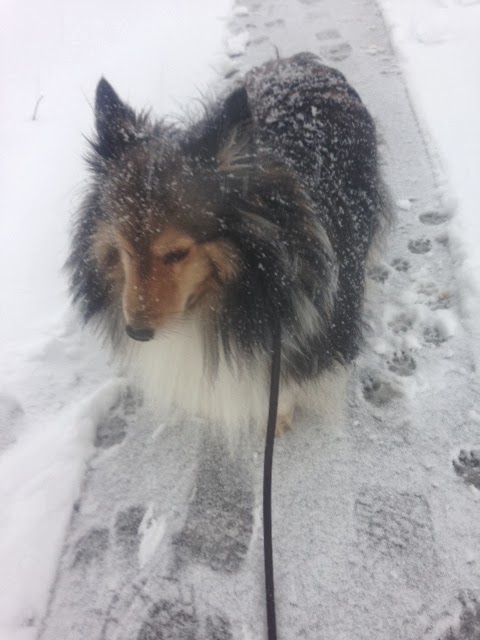
By the look on her face you can tell Dallas does not like the snow!
What is your pup's favorite season?
Labels:
Blizzard,
Dog,
Dog Behavior,
Dog Walk,
Pets,
Photos,
Snow,
Winter,
Wordless Wednesday
Saturday, January 18, 2014
Belly Rubs, Scratches Under The Ears - How To Pet Your Pet
Most dogs can't resist a rub down the back, scratches under their ears, or the ever enjoyable belly rub. Cats seem to not be able to get enough or rubs under their chin. You may be surprised to find that sometimes even the friendliest, most social pets may shy away or react negatively to being approached by an outstretched hand. Don't all dogs and cats love to be petted by their humans?
Myth: Dogs like to be scratched on the top of their head. Many dogs will back away if you reach over the top of their head to give them a pat, Since their field of vision does not include the area above them reaching over their head makes many dogs nervous and may cause them to react.
Myth: A cat laying on his back wants a belly rub. In reality, few cats enjoy to have their bellies rubbed. When a cat feels vulnerable or in danger, laying on their back allows them all four legs (and four feet of claws) to defend themselves. Reach for them when they are in this position and you may be mistaken for the enemy.
What do dogs like best? Many of my furry canine friends love rubs under their ears - preferably both sides at the same time. Scratches on the lower back is another favorite as well as long soothing rubs down their sides.
My kitty friends always enjoy rubs on the sides of their neck and they respond happily with purrs. My cat Tiger loves to have his face rubbed between his eyes down his nose, this really seems to calm and comfort him, but he is the only one I know who enjoys that. Many prefer to come to me, rub around my legs, and then walk away with out wanting me to reach out to touch them.
The number one rule: Never reach out to touch a a dog or cat you don't know. Bad experiences from their past could cause them to act out due to fear or pain. Everyone has their preferences but their purrs and wagging tails always communicate their happiness.
Myth: Dogs like to be scratched on the top of their head. Many dogs will back away if you reach over the top of their head to give them a pat, Since their field of vision does not include the area above them reaching over their head makes many dogs nervous and may cause them to react.
Myth: A cat laying on his back wants a belly rub. In reality, few cats enjoy to have their bellies rubbed. When a cat feels vulnerable or in danger, laying on their back allows them all four legs (and four feet of claws) to defend themselves. Reach for them when they are in this position and you may be mistaken for the enemy.
What do dogs like best? Many of my furry canine friends love rubs under their ears - preferably both sides at the same time. Scratches on the lower back is another favorite as well as long soothing rubs down their sides.
My kitty friends always enjoy rubs on the sides of their neck and they respond happily with purrs. My cat Tiger loves to have his face rubbed between his eyes down his nose, this really seems to calm and comfort him, but he is the only one I know who enjoys that. Many prefer to come to me, rub around my legs, and then walk away with out wanting me to reach out to touch them.
The number one rule: Never reach out to touch a a dog or cat you don't know. Bad experiences from their past could cause them to act out due to fear or pain. Everyone has their preferences but their purrs and wagging tails always communicate their happiness.
Sunday, December 22, 2013
7 Reasons To Walk Your Dog
There are lots of reasons to leash up your pup and "hit the road", "pound the pavement" or "take a stroll in the park". Running free in a fenced yard or playtime at a dog park are great but neither has as many health benefits as an old fashioned walk. I have compiled a list of my top seven reasons why you should walk your dog. Some of these reasons may surprise you. Although the list is in no particular order, the first reason I am listing is my favorite.

1) A daily walk is a wonderful opportunity for bonding time with your pooch: There is nothing like experience long walks together in beautiful weather. Although there will be days of rain, snow, or other inclement weather you need to take the bad with the good - together.
2) Walking is not only great exercise: Starting the day with an invigorating walk is a wonderful stress reliever.
3) Outdoor walking is great for your dog's feet: Walking on hard pavement will help file your dog's nails.
4) Dog's that get out and walk are better socialized: Running around in a fenced yard is very isolating. If your dog doesn't see people, other dogs and animals they will not learn proper behavior.
5) It helps them learn their neighborhood: As you walk with your dog they will learn the sounds and
smells of their neighborhood/ They will also mark their territory, leaving their scent along the way. This serves as a guide for them to find their way home in the event they wander away alone.
6) Walking is good for all ages: Puppies and young dogs need an outlet for their energy; adult dogs will benefit greatly from the daily exercise. Walking helps older dogs stay active in their senior years.
7) It helps prevent dogs from becoming fearful: Locked behind a high fence, dogs hear noises they don't understand and they have no way to investigate them. When out for a walk these noises surround them, they can see what they hear. They take clues from you, their walker, that tells them if these noises are cause for alarm.
Nothing makes my dog, Dallas, happier than her daily walk. Even if it is just a short walk around the block I can tell she enjoys every minute...and so do I.
1) A daily walk is a wonderful opportunity for bonding time with your pooch: There is nothing like experience long walks together in beautiful weather. Although there will be days of rain, snow, or other inclement weather you need to take the bad with the good - together.
2) Walking is not only great exercise: Starting the day with an invigorating walk is a wonderful stress reliever.
3) Outdoor walking is great for your dog's feet: Walking on hard pavement will help file your dog's nails.
4) Dog's that get out and walk are better socialized: Running around in a fenced yard is very isolating. If your dog doesn't see people, other dogs and animals they will not learn proper behavior.
smells of their neighborhood/ They will also mark their territory, leaving their scent along the way. This serves as a guide for them to find their way home in the event they wander away alone.
6) Walking is good for all ages: Puppies and young dogs need an outlet for their energy; adult dogs will benefit greatly from the daily exercise. Walking helps older dogs stay active in their senior years.
7) It helps prevent dogs from becoming fearful: Locked behind a high fence, dogs hear noises they don't understand and they have no way to investigate them. When out for a walk these noises surround them, they can see what they hear. They take clues from you, their walker, that tells them if these noises are cause for alarm.
Nothing makes my dog, Dallas, happier than her daily walk. Even if it is just a short walk around the block I can tell she enjoys every minute...and so do I.
Saturday, December 21, 2013
Pet Selfies!
| Dallas |
| Violet |
| Tiger |
Thursday, December 19, 2013
A Fun and Safe Holiday To Create Lasting Memories for You and Your Dog
Holiday time can be a fun and exciting time of year but it can also be stressful for your dog. Dog's don't always like or understand the changes the holiday's bring. Enjoy a happy, festive, and safe holiday while creating lasting memories for you and your furry friend.
Holiday photos: A Christmas photo with Santa may sound like the perfect holiday memory but it is not one all dogs enjoy. A photo session in a crowded pet store may be more stressful than fun for your pup. Those who don't want to sit on Santa's lap may prefer to sit along side or be held by a family member familiar friend who can join in. Or opt for a festive photo out in the snow or a peaceful shot of your dog laying by a Christmas tree.
Santa hats are not for everyone: Many dog's don't like to dress up. Although they may look cute in an elf costume or Santa hat, your dog may not be feeling the joy. A festive collar, bandanna, or bow may be more their style. For those who will cooperate, be sure the costume is correctly sized and comfortable for your pet. Some dog's love to show off their fashionable outfits!
Homemade treats: Baking Christmas cookies? Make some treats for your pup! Be sure to use a recipe that uses only dog friendly ingredients. Your dog will sure to be waiting in the kitchen while their treats are baking!
Keep the food out of reach: Holiday parties always bring food that can be tempting to your dog but potentially harmful. Chocolate is highly toxic for dogs so be sure to keep the candy bowl out of reach. Same for nuts, small bones, and alcoholic drinks. Keep tempting bowls of food away since too much of any type of food can cause tummy trouble for your furry friend. Instead, keep their favorite treats on hand so they can enjoy as well.
Ribbons, wrappings, and bows: Many dogs, especially puppies, like to chew on gift wrappings, ribbons, and bows. Keep these items out of reach as they can be harmful if swallowed.
Toxic plants: Holiday plants, such as Poinsettias, Mistletoe, and Holly, are poisonous. Keep them out of your dog's reach and be sure to watch for fallen leaves and berries.
Enjoy a happy holiday season and a safe and healthy New Year!
Holiday photos: A Christmas photo with Santa may sound like the perfect holiday memory but it is not one all dogs enjoy. A photo session in a crowded pet store may be more stressful than fun for your pup. Those who don't want to sit on Santa's lap may prefer to sit along side or be held by a family member familiar friend who can join in. Or opt for a festive photo out in the snow or a peaceful shot of your dog laying by a Christmas tree.
Santa hats are not for everyone: Many dog's don't like to dress up. Although they may look cute in an elf costume or Santa hat, your dog may not be feeling the joy. A festive collar, bandanna, or bow may be more their style. For those who will cooperate, be sure the costume is correctly sized and comfortable for your pet. Some dog's love to show off their fashionable outfits!
Homemade treats: Baking Christmas cookies? Make some treats for your pup! Be sure to use a recipe that uses only dog friendly ingredients. Your dog will sure to be waiting in the kitchen while their treats are baking!
Be aware of hidden dangers the festivities can bring - You don't want to spend
Christmas Eve at the emergency vet:
Keep the food out of reach: Holiday parties always bring food that can be tempting to your dog but potentially harmful. Chocolate is highly toxic for dogs so be sure to keep the candy bowl out of reach. Same for nuts, small bones, and alcoholic drinks. Keep tempting bowls of food away since too much of any type of food can cause tummy trouble for your furry friend. Instead, keep their favorite treats on hand so they can enjoy as well.
Ribbons, wrappings, and bows: Many dogs, especially puppies, like to chew on gift wrappings, ribbons, and bows. Keep these items out of reach as they can be harmful if swallowed.
Toxic plants: Holiday plants, such as Poinsettias, Mistletoe, and Holly, are poisonous. Keep them out of your dog's reach and be sure to watch for fallen leaves and berries.
Enjoy a happy holiday season and a safe and healthy New Year!
Saturday, August 10, 2013
Keeping Your Dog Happy, Healthy, and Well Groomed
Without proper grooming, my Sheltie, Dallas, becomes a matted mess. Frequent brushing helps but a visit to her favorite groomer is a must to keep her looking and feeling great. Dallas is always happy to go to "the spa", however, I am sure she doesn't realize the health benefits. All she knows is that it is a nice place to visit.
| Dallas is ready for her "Day at the Spa" |
Dallas' day at the groomer includes:
Bath, Trim & Style If her skin is dry, or a flea is found, she will have a soak with the proper special shampoo. She will be completely dried, brushed, trimmed, and styled. All very important to prevent matted fur which can be painful and cause skin damage and irritation.
Nail Trim Keeping nails trimmed is important for proper foot position when walking. It also prevents long nails from catching on carpets or other surfaces that could cause injury.
Teeth Brushing Helps to prevent tarter build-up that could lead to painful teeth and tooth loss. Unhealthy teeth and gums can lead to poor nutrition and weight loss. Brushing teeth also helps to keep breath smelling fresh.
Ear Cleaning Keeping ears clean, and trimming long hairs around ears, helps prevent painful infections.
Care needs to be taken when choosing the right groomer for your dog. You will know when you have found the right fit when your dog is happy and willing to go. If your pup refuses to enter the shop it is probably time to go elsewhere.
Before taking your dog for the first time it is best to visit the salon and speak to the groomer. Let them know your dog's breed and temperament. Don't keep any secrets. If your pup doesn't like to have their feet touched let them know. Does your usually sweet natured pooch suddenly growl when their face is touched? Definitely give the heads up.
Take a look around. Is the shop neat and clean? Do the other dogs there seem happy and content? Take note of the overall vibe of the salon.
When Dallas is done she always comes out with her tail wagging. I can tell she is happy and proud of her new look. Of course, no look is complete without a bandanna and bow!
Friday, July 12, 2013
What If Your Dog Doesn't Like to Go For Walks?
Suddenly refusing or avoiding physical activity may be a sign of injury or illness, so if this is new behavior a visit to the vet may be in order. However, if you have recently adopted a new furry friend and want to encourage long walks or if your usually inactive pup needs some exercise here are some tips to get them up and moving.
Make sure the collar is not to tight or the leash too heavy. You should be able to easily fit two fingers under your dog's collar - not too tight that it will choke but not so loose they can pull out. It's also important to have the proper width lead with the appropriately sized hook. Using a wide, heavy leash with a large heavy clasp is too much weight for a little dog to walk around with.
Schedule your walks at the same time each day. Your dog will anticipate their daily walk if they know when to expect it each day.
Avoid extreme heat. On hot days, walk in the early mornings or evenings when the sun is not as strong. Always bring along water for you and your pup to stay hydrated.
Bring along the treats. It always helps to have a little encouragement along the way.
Mix it up. Travel different routes for your daily walks. Your pup will be excited about the different sights, sounds and smells. They will enjoy going new places and having new experiences.
Most importantly, have fun. If you are excited about the walk your dog will be too.
Wednesday, July 3, 2013
Sunday, June 30, 2013
Summer Fears - Thunderstorms and Fireworks - Non Medical Ways to Calm Your Dog
Summertime can be a lot of fun for the family pup but it can also be very frightening. Warmer temperatures bring thunderstorms and the July 4th holiday celebrations include fireworks which, for many dogs, can cause anxiety.
The noise of these events can cause the fearful dog to hide, bark excessively, or lick themselves until their skin is raw. Medications can help but before you reach for the pill bottle you may want to try some non-medicinal remedies first.
Don't React Negatively
Your dog takes many clues from your verbal and non-verbal behavior. Reacting negatively to these events will signal to your pup that there is a need for concern. Do you run frantically to close windows at the first rumble of thunder you hear? Your dog will sense the change of your behavior (from calm to frantic) and associate it to the noise of the thunder, therefore seeing it as a cause for alarm.
Don't Anticipate Their Fear

Running to your dog to calm them at the first pop of a firecracker is telling them the noise is something to fear. Doing this you can actually be teaching your dog to be afraid.
Provide a Safe Haven
Many dogs will run underneath a bed, in a closet, or other small space at the first pop of a firecracker
or roll of thunder. Providing a cozy "safe haven", a place where pup can relax and feel safe and secure at any time. A dog crate with cozy bedding, that can be covered with a sheet or towel, will make a "cave like" area that dogs like. Be sure that it is in an area with frequent activity so you pup is not isolated which my add to their feelings of anxiety.
Dress for Success
Many pups have found relief with use of the Thundershirt, a tight fitting shirt that gives dogs comfort and helps to relieve anxiety. There is no medication involved and it is available in all sizes to fit every dog.
Thunderstorms, fireworks, and their loud noises come and go. Keep your dog as calm as possible until the event passes and quickly return to the activities they enjoy.
The noise of these events can cause the fearful dog to hide, bark excessively, or lick themselves until their skin is raw. Medications can help but before you reach for the pill bottle you may want to try some non-medicinal remedies first.
Don't React Negatively
Your dog takes many clues from your verbal and non-verbal behavior. Reacting negatively to these events will signal to your pup that there is a need for concern. Do you run frantically to close windows at the first rumble of thunder you hear? Your dog will sense the change of your behavior (from calm to frantic) and associate it to the noise of the thunder, therefore seeing it as a cause for alarm.
Don't Anticipate Their Fear
Running to your dog to calm them at the first pop of a firecracker is telling them the noise is something to fear. Doing this you can actually be teaching your dog to be afraid.
Provide a Safe Haven
Many dogs will run underneath a bed, in a closet, or other small space at the first pop of a firecracker
or roll of thunder. Providing a cozy "safe haven", a place where pup can relax and feel safe and secure at any time. A dog crate with cozy bedding, that can be covered with a sheet or towel, will make a "cave like" area that dogs like. Be sure that it is in an area with frequent activity so you pup is not isolated which my add to their feelings of anxiety.
Dress for Success
Many pups have found relief with use of the Thundershirt, a tight fitting shirt that gives dogs comfort and helps to relieve anxiety. There is no medication involved and it is available in all sizes to fit every dog.
Thunderstorms, fireworks, and their loud noises come and go. Keep your dog as calm as possible until the event passes and quickly return to the activities they enjoy.
Subscribe to:
Posts (Atom)